Wardiman S.Pt
Formulator PT Mensana Aneka Satwa
Feed is one of the most critical factors in achieving successful livestock production, alongside genetics and environmental conditions. It also represents the largest component of poultry production costs, accounting for approximately 70–80% of the total production expenses. Therefore, both the quality and quantity of feed are critical factors that must be carefully managed to support optimal animal performance. The feed provided should be of high quality and comply with established standards to ensure the health, productivity, and overall performance of the livestock.
High-quality feed must be capable of meeting the nutritional requirements of livestock while maintaining a high level of palatability. In addition, feed should possess high digestibility to ensure that the nutrients it contains can be efficiently utilized by the animals. Feed quality is also determined by its safety, requiring it to be free from toxins and anti-nutritional factors that may adversely affect animal health, productivity, and overall performance. Therefore, feed quality control plays a crucial role in ensuring that the feed consumed by livestock consistently meets established quality standards and supports optimal production performance.
Feed quality control (QC) refers to a systematic process designed to ensure that feed products comply with established standards and specifications. Quality control measures should be implemented throughout the entire feed production chain, beginning with the receiving and storage of raw materials, continuing through the feed manufacturing and mixing processes, and extending to the final delivery and feeding of animals. At each stage, various inspection and monitoring procedures are conducted to verify product consistency, safety, and nutritional quality. These measures are essential to ensure that the feed produced meets the expected quality standards and effectively supports optimal livestock performance.
Quality Control Procedures for Raw Material Receiving
Feed quality control begins with the raw material reception process. Raw material receiving is the main gateway in quality control programs in feed mills as well as among livestock farmers. This process is very important to ensure that the raw materials received meet the required specifications. Particularly for self-mixing farmers, raw material quality control is essential to ensure that the materials used are consistent with those included in the formulation calculations. During raw material reception, both physical and chemical tests should be conducted. Physical characteristics are evaluated to determine whether a raw material should be accepted or rejected. Meanwhile, chemical testing can provide analytical values that may be used as a basis for feed formulation.
Physical evaluation includes organoleptic testing, which is a method of assessing a material qualitatively using the human senses. The organoleptic parameters observed include color, texture, odor, and the presence or absence of contaminants. Corn is one of the dominant feed ingredients used in feed production, and in practice, the quality of corn is often highly variable. Therefore, quality control during the reception of corn from suppliers greatly influences the quality of the feed produced.
According to Firmanansyah et al. (2007), there are two requirements used to determine the classification and quality standards of corn, namely general and specific requirements. General requirements include being free from pests and diseases, foul or sour odors, and chemical substances such as insecticides and fungicides. Specific requirements include moisture content, damaged kernels, kernels of other colors, broken kernels, and foreign materials. Meanwhile, SNI 8926:2020 has established quality standard requirements for corn as a feed ingredient, which include moisture content, damaged kernels, different colored kernels, broken kernels and faeces.
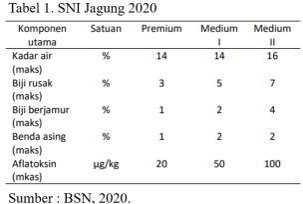
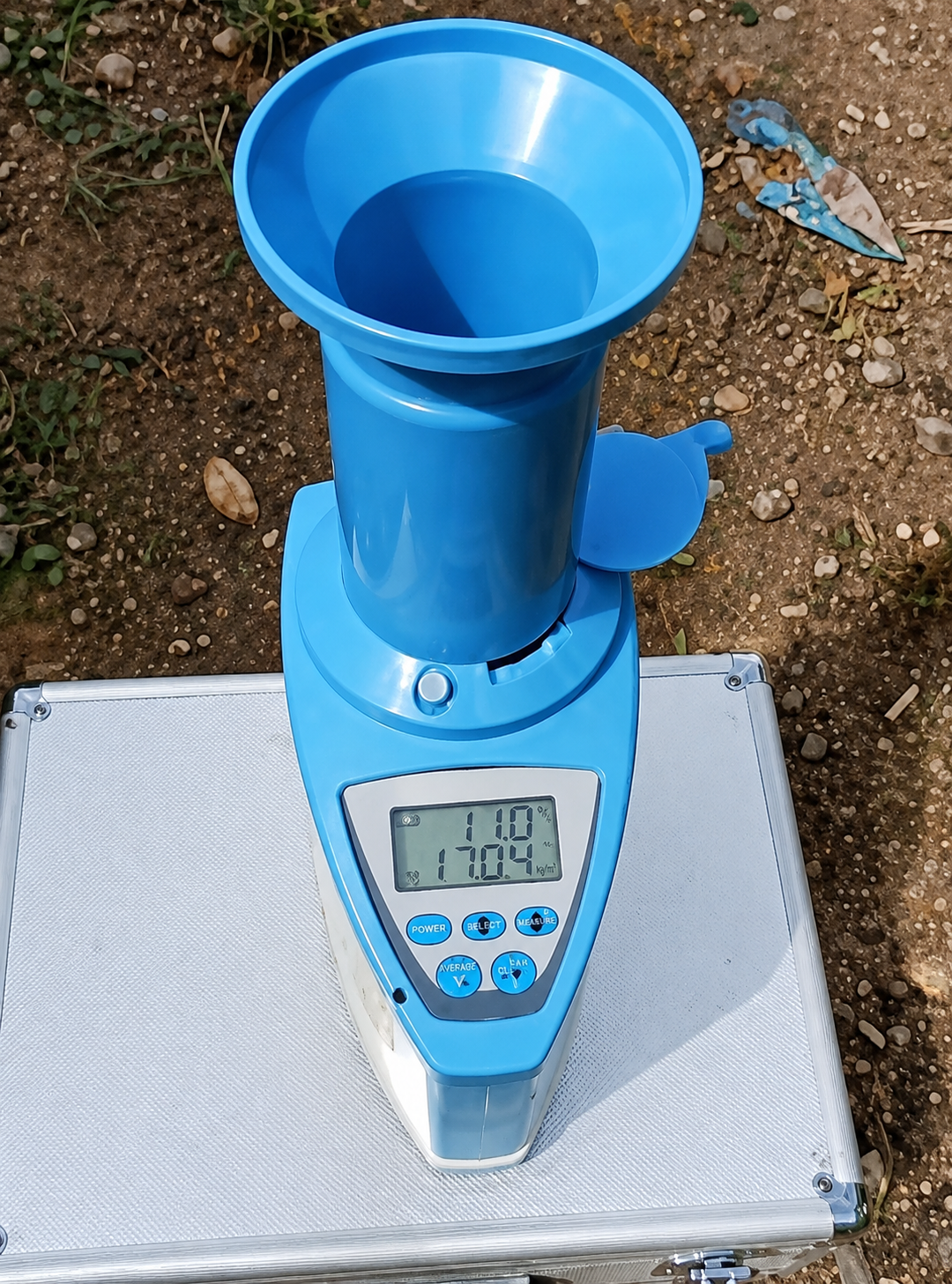
Moisture content testing of corn at the time of receipt is essential to ensure that the corn meets the required standards. Moisture content is an important parameter because it is closely related to the nutritional quality of the corn and the presence of fungal contamination along with its mycotoxins.
Table 1. Laboratory Test Results of Corn Samples
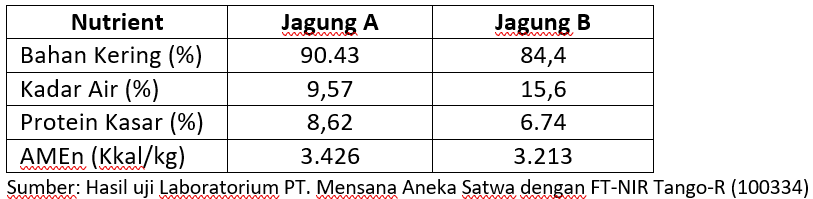
Table 1 shows the laboratory test results of PT. Mensana Aneka Satwa for two corn samples. The results indicate that the higher the moisture content in corn, the lower the dry matter content, which consequently leads to a reduction in other nutrient contents such as protein and energy. These findings further emphasize the importance of moisture content testing in incoming corn, as it significantly affects nutrient composition and formulation calculations.
Moisture content in corn is also closely related to fungal contamination and mycotoxin production. One of the most common hazards found in corn is aflatoxin contamination, which is produced by Aspergillus flavus and Aspergillus parasiticus. These fungi are a global problem, particularly in tropical regions (Lillehoj, 1978). Both are tropical fungi that frequently infect legumes and cereal grains when conditions are favorable, namely high substrate moisture content and high ambient humidity. Aflatoxin is a secondary metabolite produced by A. flavus. Indonesia, with its tropical climate characterized by high rainfall, temperature, and relative humidity, provides ideal conditions for the growth of aflatoxin-producing A. flavus. Therefore, aflatoxin contamination in Indonesia is difficult to avoid (Wu et al., 2011). Mycotoxin contamination in poultry feed can significantly affect poultry health and productivity. Mycotoxins may cause immunosuppression or reduce the animals’ immune response, making them more susceptible to disease.
Quality Control During Storage
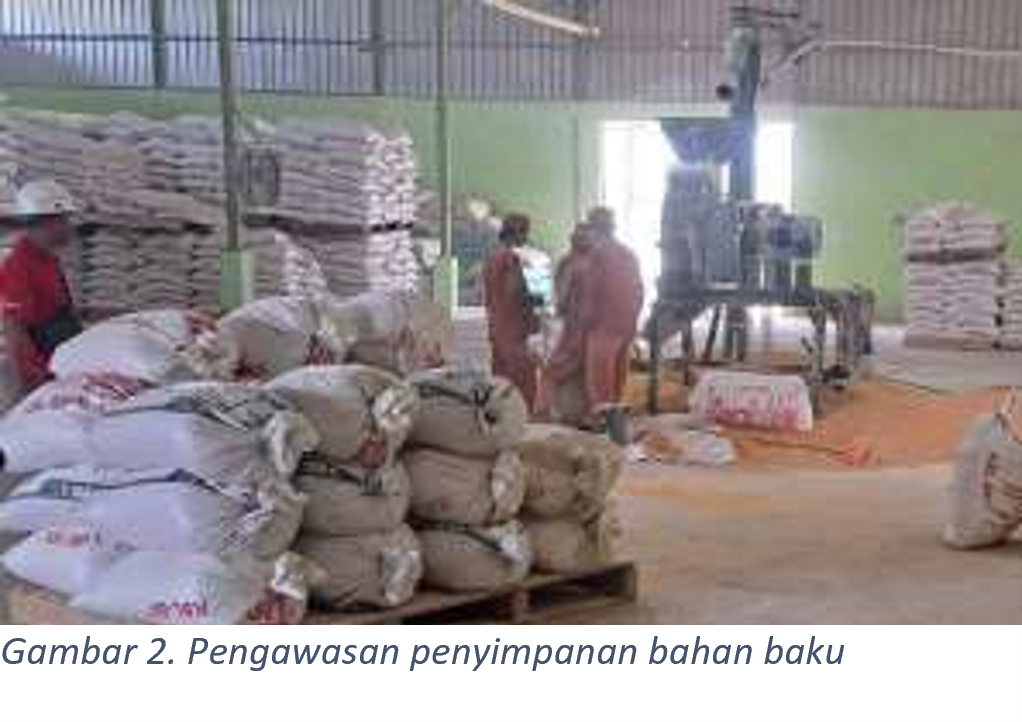
Several factors influence the quality of raw materials, including management practices and storage conditions (Kushartono, 2002). Both in smallholder livestock farms and large-scale industrial operations, the warehousing or storage component of feed raw materials is a very important aspect that must be properly managed. According to Wigati (2009), storage is an activity carried out to retain or delay the use of an item before it is utilized, without altering its physical form. Storage is an important process to maintain both the physical and chemical characteristics of feed materials during the period after harvesting and drying.
To maintain the quality of raw materials during storage, several factors that may reduce both the quality and quantity of feed ingredients must be considered. These include fungal attacks (fungi), insect infestations, rodent activity, as well as respiration and moisture migration (Sukria, 2019). Fungal growth is one of the most critical deterioration factors to be aware of, considering that Indonesia is located in a tropical climate with relatively high humidity. This condition supports fungal proliferation during storage. To prevent mold growth, the optimal warehouse conditions should be maintained at a temperature of around 25–30°C with relative humidity (RH) of 65–93%. Fungi can be controlled through both chemical and physical methods. Chemical control can be achieved by adding propionic acid and acetic acid, while physical control methods involve regulating temperature and humidity to conditions that are not conducive to fungal growth.
Quality Control During Mixing
The mixing of raw materials aims to optimize nutrient composition in accordance with the nutritional requirements and production objectives of livestock. Feed mixing techniques are determined by the characteristics of the feed ingredients and the final feed product to be produced. The feed mixing process has several critical points that must be considered, starting from human factors (operators), equipment (mixers, scales, etc.), and methods (sequence of ingredient addition). These aspects must be carefully managed to obtain a homogeneous finished feed, meaning that every gram of the produced feed can accurately represent the nutrient content as calculated in the formulation.
In small - scale farms, the human factor (warehouse operator) greatly influences the mixing process. Therefore, it is essential to ensure that raw material weighing is carried out in accordance with the formulated calculations. This process requires a high level of accuracy and discipline. In addition to weighing accuracy, another critical point in the mixing process is the mixing duration using a mixer. The mixing time must follow the recommendations for the specific type of mixer used, and should neither be shorter nor longer than the recommended duration, as this will significantly affect the homogeneity of the resulting feed.
The type of mixer used affects the mixing duration, where a horizontal mixer generally requires a shorter mixing time compared to a vertical mixer. Inefficiency in mixing can be caused by several factors, including insufficient mixing time, operating the mixer beyond its designed capacity, and worn, altered, or damaged mixing equipment. According to Wicker and Poole (1991), mixing time should be evaluated at least twice a year as part of an assessment of the mixer’s performance. Feed homogeneity is reflected by a coefficient of variation (CV) value of less than 10%.
Quality Control During Feeding (Feed Distribution/Feeding Stage)
Feed quality control does not end once raw materials have been mixed into finished feed, but must continue until the feed is actually consumed by the livestock. This is because the expected quality of feed is the quality that is ultimately ingested by the animals and utilized for their productive processes. Feed quality is greatly influenced by the amount of feed consumed; therefore, it is essential to ensure that high-quality feed is consumed in quantities that meet the animals’ nutritional requirements
Feeding feed in large quantities at once can lead to feed accumulation in the trough, resulting in a decline in quality because the feed is not consumed immediately. This condition is further aggravated by moisture in the feeding trough caused by saliva from the birds or spilled drinking water, which makes the feed damp and eventually leads to crust formation in the trough. These conditions can cause by fungi and other microorganisms to grow. When fungi develop, mycotoxin contamination may follow, thereby reducing the quality of the feed consumed by the livestock.
Feed quality control must be carried out from the moment raw materials are received until the feed is consumed by livestock to ensure that the feed consumed is of good and appropriate quality. Good feed quality is an essential factor in achieving optimal livestock performance. This is where the importance of establishing consistent feed quality control practices becomes evident.
